
Become a Kiwa PVEL Premium Partner
Receive more detailed Scorecard data every quarter, sent directly to your inbox.

Module breakage from hail continues to be a justifiable concern based on the high failure rate seen in HSS testing. However, PVEL’s data continues to show that hail-hardened modules are significantly more resistant to module breakage from hail impacts, and power loss from hail is negligible for modern modules.
of BOMs are HSS top performers
manufacturers are HSS top performers
of BOMs had HSS failures
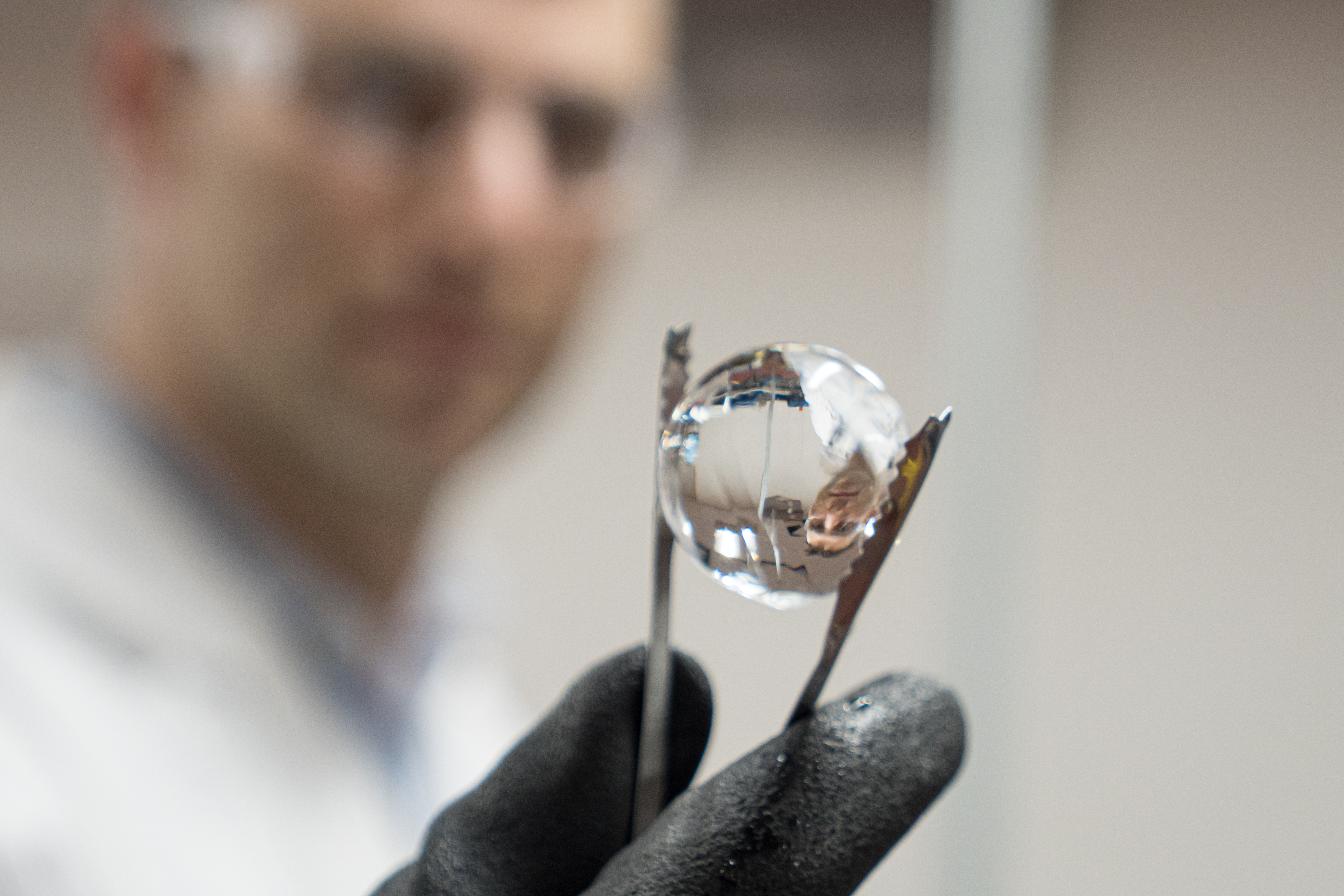
The PQP’s Hail Stress Sequence (HSS) surpasses IEC/UL minimum hail requirements to rigorously test PV modules against a range of hail impacts. HSS employs lab-created ice balls ranging in size from 35 to 55 mm, while precisely controlling hail shape, density and velocity to ensure consistent and comparable impact energies. This test is mostly focused on glass breakage while also providing insights on cell crack susceptibility, and helps buyers benchmark and select modules with superior hail resistance.
The majority of ‘standard’ modules (2.0 mm glass//2.0 mm glass) experience glass breakage from 45 mm hail impacts, and 43% of modules with this glass thickness break from 40 mm hail impacts. The glass near the module edges and holes drilled for the junction boxes is more likely to break than glass in the center of the modules.
The past year of testing continued to prove that ‘thicker glass’ modules (including 3.2 mm glass//backsheet, 2.5 mm glass//2.5 mm glass and 3.2 mm glass//2.0 mm glass) are significantly less susceptible to glass breakage than standard modules. The 2026 Scorecard BOMs include 15 module manufacturers who submitted thicker glass designs for PQP testing.
Glass//glass modules continue to show minimal power loss as cells are protected from cracking within the neutral plane. Branching cell cracks have been observed on glass//backsheet modules following hail testing, but ultimately these modules suffer relatively little hail-induced power loss due to the use of half-cut, multi-bus bar (MBB) cells. See the Power Degradation graph below for more.
HSS failures are recorded if modules break when tested at both hail sizes, which happened most with 2.0 mm glass//2.0 mm glass modules breaking at both 35 and 40 mm. A failure is also recorded when a manufacturer requests a hail retest due to glass breakage. See the Failures page for more.
Modern modules are highly resistant to power loss caused by hail-induced cell cracks for two reasons. First, most modules are of glass//glass construction, which makes cell cracks extremely unlikely to occur, except in very specific loading scenarios. Second, for modules where cell cracks have occurred, there are enough busbars covering the cell that a crack is unlikely to completely disconnect an area. This means that even modules with extreme numbers of cell cracks only lose up to 5% power, as shown here with two BOMs from Kiwa PVEL’s recent cell cracking study. Hail testing is therefore much more meaningful when focused on glass breakage, rather than cell cracking.
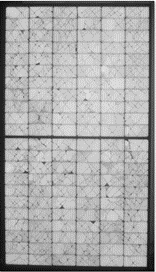
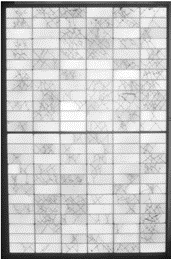
Two example BOMs with extreme levels of Kiwa PVEL-induced cell cracks from a cell cracking power loss study. Both BOMs had relatively minimal power loss after 1.5 years in the field.
The glass breakage rates from Kiwa PVEL’s hail testing of almost 350 PQP modules from the 2026 Scorecard dataset is shown below. The results are separated by 2.0 mm glass//2.0 mm glass, 3.2 mm glass//backsheet, 2.5 mm glass//2.5 mm glass and 3.2 mm glass//2.0 mm glass modules.
Despite lower sample sizes for the alternatives to 2.0 mm glass//2.0 mm glass modules, Kiwa PVEL’s results show that thicker glass modules have increased hail durability. Accessing individual BOM hail test reports remains important for sites in hail-prone regions as all three alternative designs did have some modules experiencing breakage with 50 mm hail.
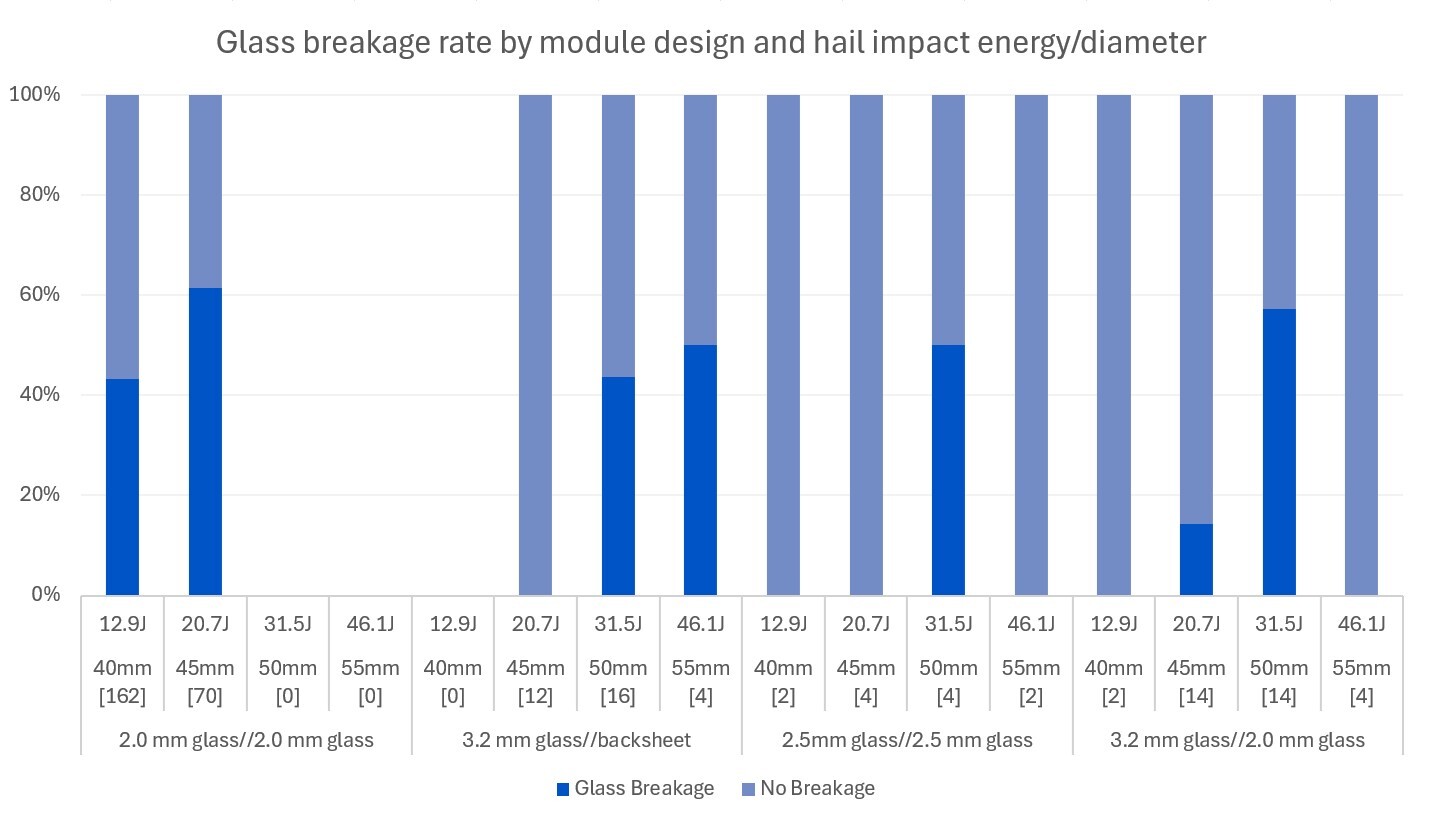
Glass breakage rates by kinetic energy and hail diameter by module type across the 2026 Scorecard dataset. Sample sizes in number of modules tested are shown in square brackets.
View Box Plot Interpretation Guide
Receive more detailed Scorecard data every quarter, sent directly to your inbox.
